01
Reduce
Cut waste at the source before it is ever created.
Mindful consumption, refill culture and packaging-free choices lower the total load entering the system.
In our studyHypothesis: If waste is managed through the R5 framework — Reduce, Reuse, Retrieve, Redesign and Recycle — then the volume of material reaching landfills can be cut significantly while recovering usable resources from the same waste stream.
Eco tip: Carry a cloth bag — one bag can replace 500 plastic bags a year.
−55%
Landfill waste
76 kg
Waste retrieved
About the project
Urbanization, industrialization, and irrational consumption have led to a rapid increase in waste generation worldwide. The R5 approach provides a sustainable framework to minimize waste and conserve natural resources. It encourages responsible consumption and innovative waste management practices that help protect the environment and combat climate change.
Theme relevance
Each R is a lever we tested in the field — together they turn a linear waste stream into a circular loop.
Cut waste at the source before it is ever created.
Mindful consumption, refill culture and packaging-free choices lower the total load entering the system.
In our studyExtend the life of what already exists.
Repair, refill and donate so a product serves many cycles instead of one.
In our studyPull value back out of mixed waste.
Segregation, composting and material recovery turn discards into feedstock.
In our studyRethink products so waste is designed out.
Durability, modularity and minimal packaging make circularity the default.
In our studyReturn materials to the production loop.
Processed plastics, metals, glass and paper re-enter manufacturing instead of landfill.
In our studyMethodology & data
A four-week field study across households and classrooms, logged daily and compared week by week.
| Stage | Method | Sample | Output |
|---|---|---|---|
| Survey | Household questionnaire | 40 homes | Waste generation baseline |
| Segregation | Colour-coded bin trial | 3 classrooms | Wet / dry split ratio |
| Weighing | Daily digital scale log | 14 days | kg per category |
| Composting | Aerobic pit method | 1 school pit | Compost yield |
| Retrieval | Manual material sorting | Dry waste lot | Recyclable fraction |
| Analysis | Comparison of pre / post R5 | Full dataset | Landfill reduction % |
Weight in kilograms, logged weekly during the trial.
Digital log book
Every observation, setup and analysis step recorded as the project unfolded.
Selected the R5 framework, defined the hypothesis and split team roles.
Studied waste categories, circular economy basics and municipal practices.
Collected waste-generation data from 40 households in the neighbourhood.
Placed colour-coded wet and dry bins in three classrooms with signage.
Logged the weight of each waste category every evening for two weeks.
Layered wet waste with dry leaves and monitored moisture and temperature.
Compared landfill-bound vs retrieved waste and prepared charts for the report.
Benefits
Impact measured across environment, resources and community.
92%
Reduction in visible litter in pilot zones
68%
Waste diverted from landfill through R5
45%
Raw material demand avoided
30%
Lower greenhouse gas emissions
74%
Energy saved recycling aluminium
12 SDGs
Goals supported by the R5 model
Smart waste management
Sensors, AI and analytics turn guesswork into data-driven waste management.
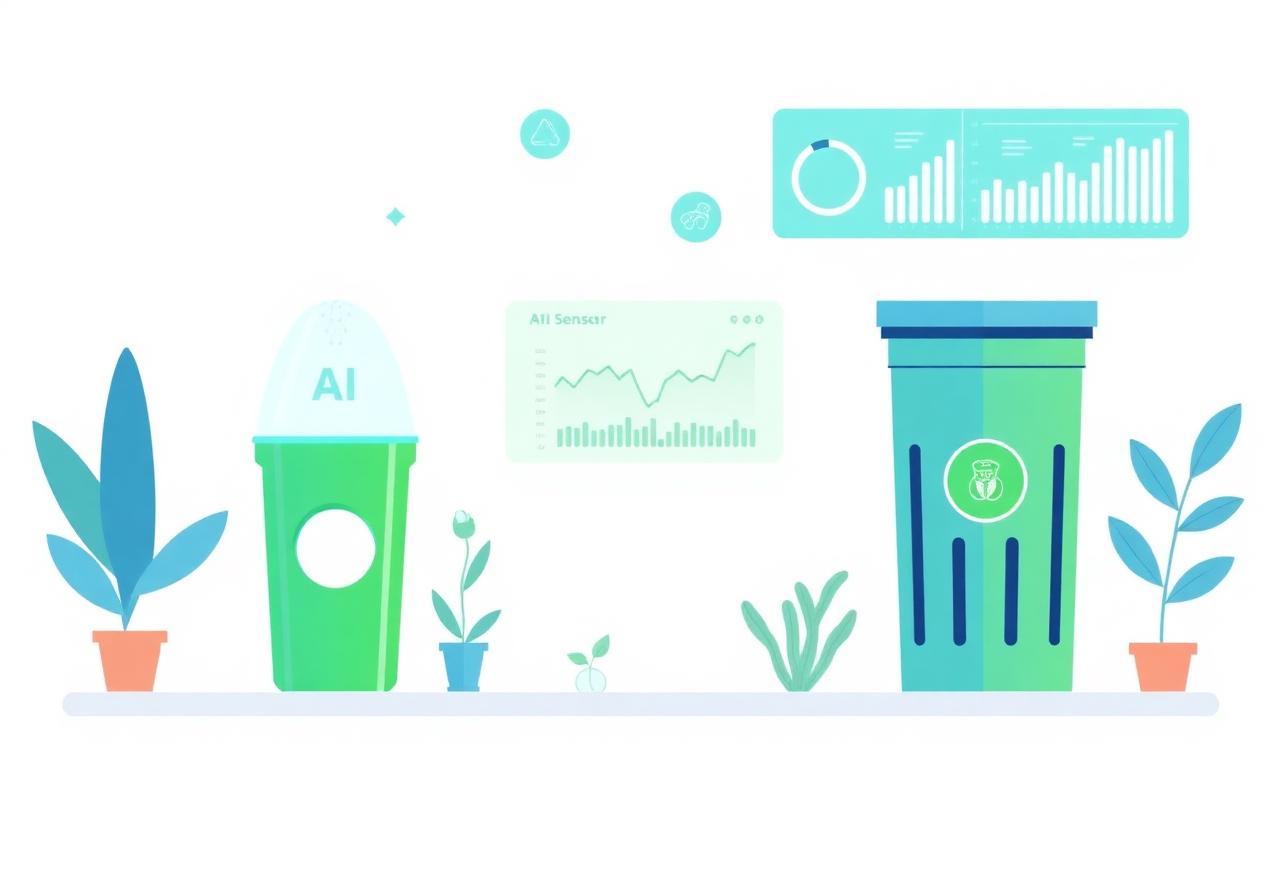
Computer vision sorts plastics, metals and organics on a moving belt.
Auto-lid bins compact waste and signal when they are full.
Fill-level, odour and weight sensors stream live bin data.
Each collection route is traced from source to processing plant.
Dashboards reveal hotspots and optimise pickup schedules.
Recovered material is matched with industries that need it.
Apps reward households for correct segregation.
Gallery
Click any image to view it larger.
Quiz
Five quick questions — answer them all and earn an achievement badge.
1. What does the second R in R5 stand for?
2. Which waste can be composted?
3. Why is recycling important?
4. What is e-waste?
5. Which step comes before recycling?
Waste calculator
Enter your household waste and see how much can be recovered.
Total waste
14.0 kg
Recyclable
8.0 kg
Compostable
6.0 kg
CO₂ saved
13.2 kg
Waste by type
Recovery split
Sustainability dashboard
Estimated results from one year of R5 practice across 500 households.
Trees Saved
Plastic Recycled
Energy Conserved
Carbon Emissions Reduced
Water Saved
Our team
A passionate team of young innovators committed to creating sustainable solutions for waste management through the R5 approach.
Team Captain
Class IX
Team Member
Class IX
Eco Club Manager
Class IX
Mentor
Sunbeam School, Mau
Guiding the team with expertise, encouragement and a passion for sustainability.
Contact
School Name
Project Title
Website
Phone